


Through the Autism CARES Act of 2024, we improve care and outcomes for people with autism and other developmental disabilities (DDs).
We:
- Train health care providers and others to screen, refer, and provide services to children with autism and other DDs
- Use findings from our research investments to improve care and help people with autism and other DDs
- Make sure that states use best practices, including for children transitioning from pediatric to adult health care providers
For more information about current autism projects, visit our:
- MCH Workforce Development Awards Chart webpage
- MCHB Research Investments
- MCHB Transition for Youth with Autism and/or Epilepsy webpage
What makes HRSA's autism programs unique?
We make it easier for people with autism and their families to get the care and services they need.
We do this by:
- Training providers to deliver high-quality care
- Using data and evidence to strengthen our programs
- Studying what works to continuously improve services
Every program includes feedback from people with lived experience.
Training the workforce
Our maternal and child health training programs have lifelong impacts on the careers of an interdisciplinary workforce. Our autism portfolio supports two training programs: LEND and DBP.
| Leadership Education in Neurodevelopmental and Other Related Disabilities (LEND) program | Developmental-Behavioral Pediatrics (DBP) Training program |
|---|---|
|
The LEND program:
In 2024,* there were:
LEND trainees and faculty provided 169,070 diagnostic services to verify or rule out autism or other DDs. *Data from July 1, 2024, to June 30, 2025 |
DBP is a sub-specialty of pediatrics. It provides testing, counseling, and services for children with developmental and behavioral issues and conditions. HRSA's program supports a three-year DBP fellowship. The fellowship prepares fellows for leadership roles as teachers, researchers, and clinicians. It also helps medical students, residents, and practicing providers learn DBP skills. In 2024,** there were:
DBP trainees and faculty provided 33,561 diagnostic services to verify or rule out autism or other DDs. **Data from July 1, 2024, to June 30, 2025 |
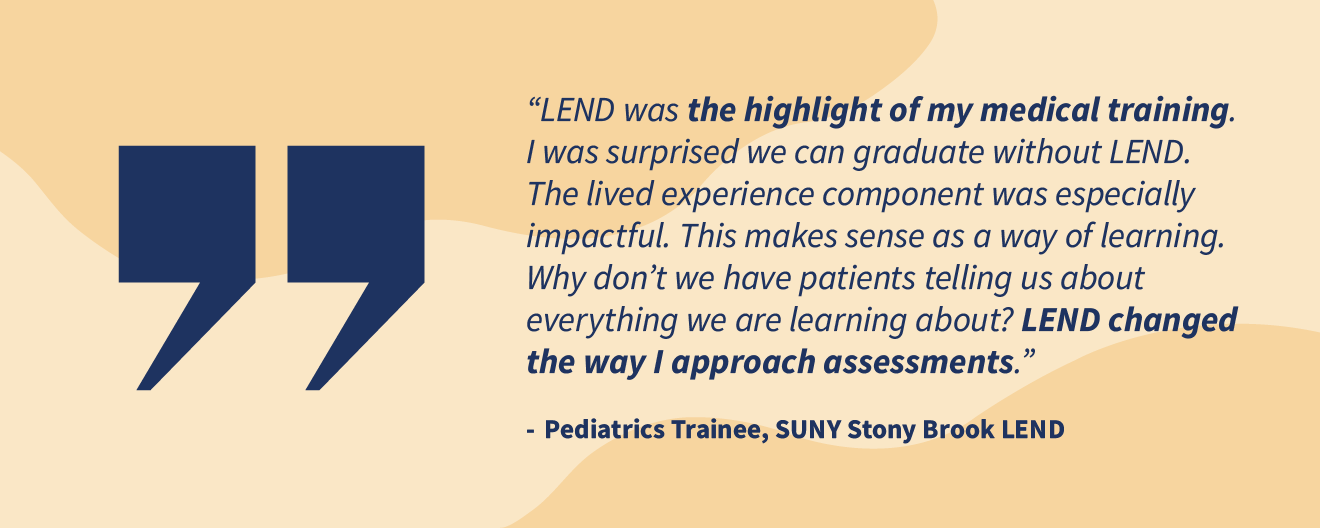
Image description
"LEND was the highlight of my medical training. I was surprised we can graduate without LEND. The lived experience component was especially impactful. This makes sense as a way of learning. Why don't we have patients telling us about everything we are learning about. LEND changed the way I approach assessments." -Pediatrics Trainee, SUNY Stony Brook LEND
Our autism portfolio also supports the Autism CARES Act National Interdisciplinary Training Resource Center through a cooperative agreement with the Association of University Centers on Disabilities (AUCD). The center provides a wide range of training and technical assistance services that support the important work of interdisciplinary training programs such as LEND and DBP.
Conducting research
Our research identifies and tests new approaches to improve the health and wellbeing of children and youth with autism across the life course. Current research programs include:
- Autism Research Consortia (Autism RC)
- Autism Research Networks (Autism RN)
- Autism Single Investigator Innovation Program (Autism SIIP)
- Autism Field-Initiated Innovation Research Studies (FIRST)
- Autism Secondary Data Analysis Research Studies (SDAR)
In Fiscal Year 2024, our Autism RN and Autism SIIP programs supported six awardees at 70 sites conducting 105 studies that
- Enrolled 10,296 participants in primary research studies
- Included over 2.3 million participants in secondary data analyses
Ensuring best practices across the country
Our programs create and advance national-, state-, and local-level strategies to support young people with autism or epilepsy as they transition from child- to adult-focused health care services. This aligns with our work to improve the health and quality of life of children with complex health and social needs.
We promote partnership and collaboration between child and adult health care systems. We also foster effective communication among individuals with autism, their families, and their providers. Our goal is that young people with autism make a successful transition to adulthood in all aspects of their lives.
We awarded a new demonstration program in Fiscal Year 2024, Transition for Youth With Autism and/or Epilepsy. It aims to improve the quality of life and wellbeing of youth with autism or epilepsy and their families or caregivers as the youth transition from child- to adult-focused services.
Why are HRSA's autism programs so important?
According to HRSA's 2023-2024 National Survey of Children's Health, more than 2.7 million children 3 – 17 years old in the United States have autism. Early screening, diagnosis, and services can improve a child's development, symptoms, daily functioning, and quality of life.
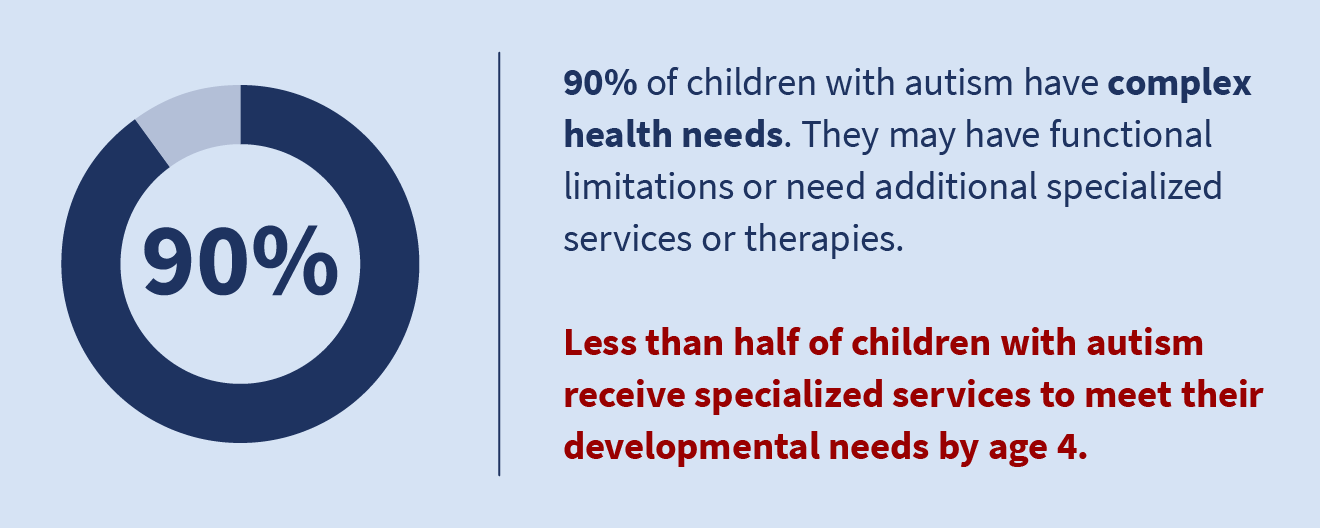
Image description
90% of children with autism have complex health care needs, meaning they require the elevated need or use of specialized services or therapies, or they have functional limitations. However, less than half of children with autism receive specialized services to meet their developmental needs by age 4.
Children and adolescents with autism face different challenges than their peers without autism. They are more likely to have functional limitations that impact their everyday activities and participation. Young children with autism are also less likely to demonstrate the skills and abilities needed to thrive in school, including physical wellbeing and motor development, social and emotional development, early literacy and math skills, language acquisition, and how a child learns (for example, curiosity and temperament). Additionally, children with autism are less likely to meet criteria for flourishing, which reflects overall positive development and well-being.
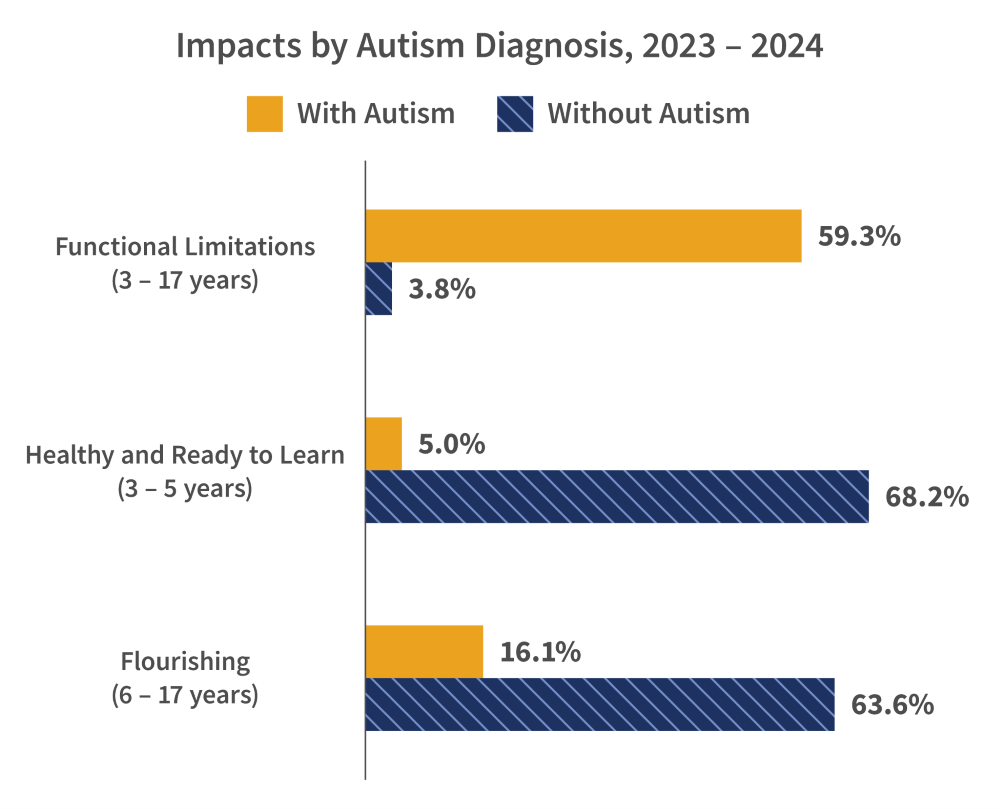
Image description
A horizontal bar chart that shows impacts by autism diagnosis in 2023 – 2024 compares three developmental metrics with specific age ranges for children with and without autism. Functional Limitations (3-17 years): 59.3% for children with autism vs. 3.8% for children without autism. Healthy and Ready to Learn (3-5 years): 5.0% for children with autism vs. 68.2% for children without autism. Flourishing (6-17 years): 16.1% for children with autism vs. 63.6% for children without autism.
Autism also impacts families. Caregivers of children with autism are more likely than those without an autistic child to experience disruptions to employment, spend significant time coordinating care, and face challenges accessing needed services. The impacts on family wellbeing, economic stability, and access to care are greatest for families with a child with moderate or severe autism. Over 40% of those caring for children with severe autism report cutting back at work or leaving a job, and the majority of caregivers of children with moderate to severe autism spend time each week providing or coordinating care.
Key Estimates of Autism’s Impact on Families, 2023-2024
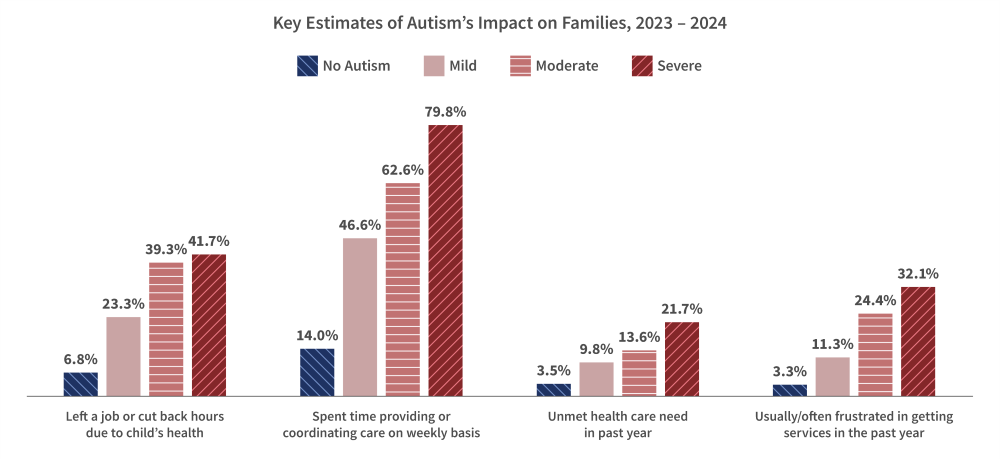
Image description
A bar chart shows impacts on caregivers in 2023 - 2024 based on the severity of their child’s autism. It compares four groups (no autism, mild autism, moderate autism, and severe autism) across four categories of caregiver experience (left job or cut back hours, weekly care coordination, unmet health care need, and frustration getting services). Across all categories, the impact increases with the parent/caregiver-reported severity of autism.
What's the history of these autism programs?
Congress first authorized these HRSA programs in 2006 (PDF - 137 KB) and reauthorized them in 2011, 2014, 2019, and 2024.
How HRSA coordinates autism efforts with other federal agencies
The Autism CARES Act also funds work in other Department of Health and Human Services (HHS) agencies like the Centers for Disease Control and Prevention and the National Institutes of Health.
HRSA works with other federal agencies to improve care for children and youth with autism and other DDs by participating on the Interagency Autism Coordinating Committee (IACC). The IACC coordinates all of HHS' autism efforts.