


In 2023, we launched a maternal health research collaborative. Through studies and methods, we aim to:
- Better understand gaps in maternal health outcomes and how to address them
- Build the skills of awardees to conduct this research
- Find community-based solutions
Who makes up this collaborative?
A coordinating center supports 16 research centers. View the awards chart to find organizations and amounts HRSA invested.
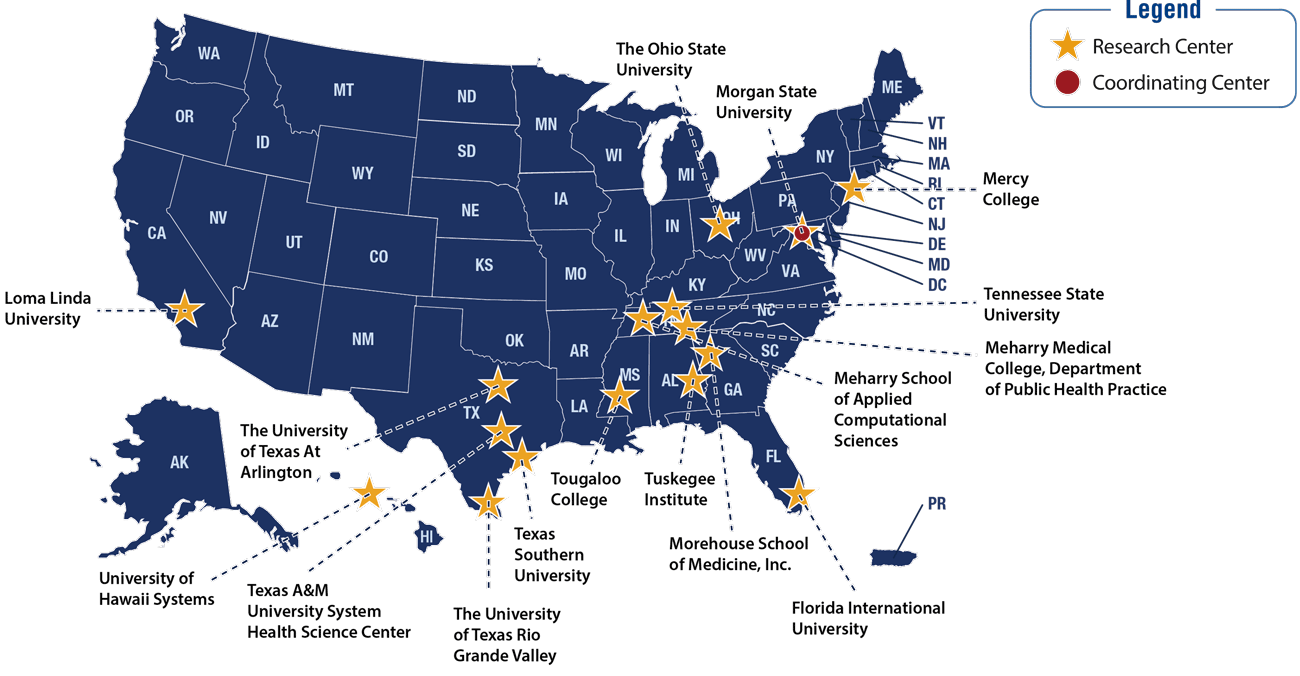
Map of the United States, including Alaska, Hawaii, and Puerto Rico, showing Geographic Distribution of Grantees. 16 research centers are shown: Loma Linda University (California); University of Hawaii Systems; The University of Texas at Arlington; Texas A&M University System Health Science Center; The Unverisity of Texas Rio Grande Valley; Texas Southern University; Tougaloo College (Mississippi); Tuskegee Institute (Alabama); Morehouse School of Medicine, Incorporated (Georgia); Florida International University; Meharry School of Applied Computational Sciences (Tennessee); Meharry Medical College, Department of Public Health Practice (Tennessee); Tennessee State University; The Ohio State University; Morgan State University (Maryland); Mercy College (New York). A Coordinating Center is located at Morgan State University, Maryland.
How is a research collaborative different from a research network?
MCHB research networks fund one grantee. The grantee then works with other institutions on a particular study topic.
In a research collaborative, we fund multiple research centers and a Coordinating Center at Morgan State University in Maryland. The Coordinating Center helps build the capacity of the research centers to conduct the research.
How does the Coordinating Center support the other research centers?
The Coordinating Center:
- Supports research by helping the research centers conduct their studies. It helps each center create a maternal health research center at their institution.
- Mentors the next generation of maternal health researchers.
- Builds capacity by
- Creating a learning community for research centers to share best practices
- Offering education activities to help research centers conduct research and compete for funding
- Organizing steering committee and in-person meetings
What topics will the research focus on?
Each research institution will study an aspect of maternal health that’s important to their local community. These may include:
- Workforce shortages and solutions
- Care models focused on preventing serious maternal illness and deaths
- Preventing serious maternal cardiovascular illness
- Behavioral health, mental health, and social risk factors
What approaches will the research teams take?
They’re expected to:
- Engage communities in all aspects of the research
- Train new and early career researchers to conduct maternal health research
- Complete a research project on gaps in maternal health outcomes
- Develop community solutions to address the gaps
- Publish the research findings and translate them into practice
They may use tech technologies in their studies, including:
- Predictive modeling: Uses statistical and computer modeling methods, based on historical data and patterns, to predict future health outcomes or trends
- Mobile applications: Use existing phone applications or create new ones
- Virtual learning platforms: Offer education through online systems and software
How will you use these studies to improve programs and services?
We’ll use these studies to increase the number of researchers from medically underserved communities we train in maternal health research.