


Since its launch on Mother's Day in May 2022, the Hotline has received more than 98,664 calls and texts, serving pregnant and postpartum women (women who recently gave birth) and their loved ones.
Contact Volume by Fiscal Year (FY) Quarter
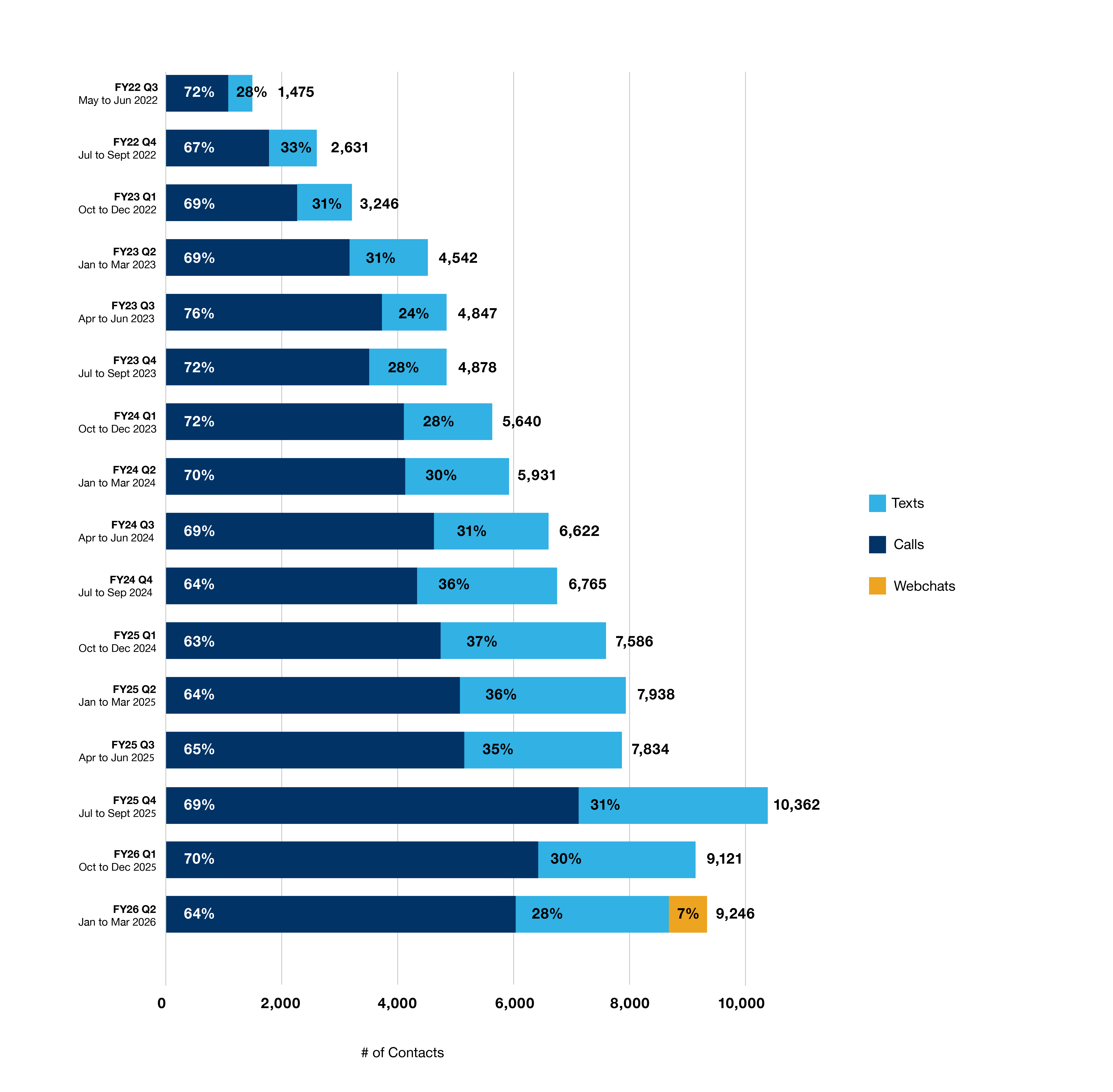
NOTE: This figure has been updated through routine data quality review; minor differences from earlier versions may occur.
Detailed description of Volume by FY Quarter
The data below show the reach and quality of Hotline services. All data are from January 2026 through March 2026.
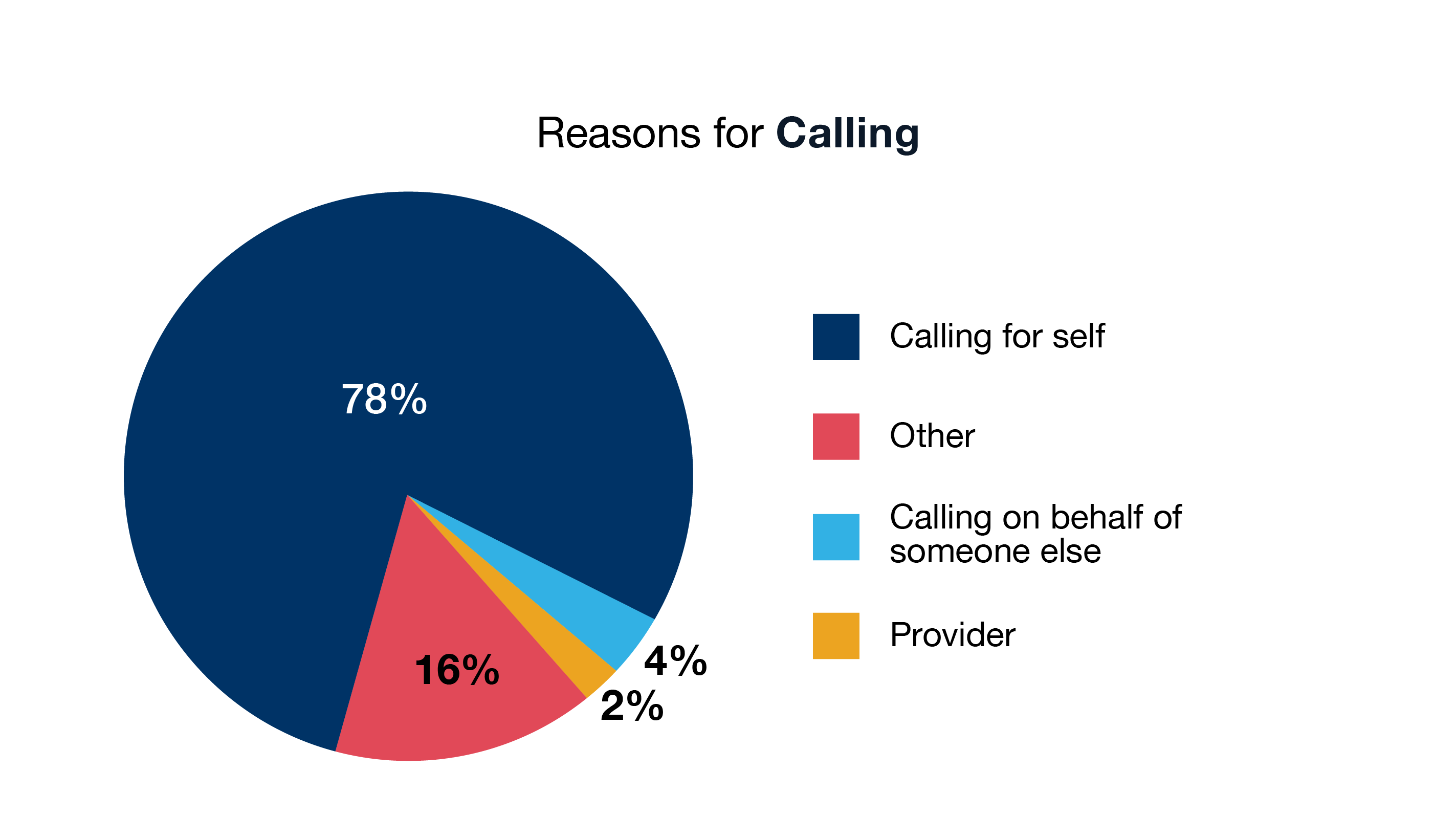
Did people contact the Hotline for themselves or someone else?
-
Most people are calling for themselves:
- 78% are calling for themselves, while 4% are calling on behalf of someone else (e.g., for a family member or friend)
- 2% said they were providers (contacting on behalf of a client or requesting information about the hotline)
- 16% were categorized as other/could not be determined1
- 1
Caller type is determined by the counselor based on the interaction.
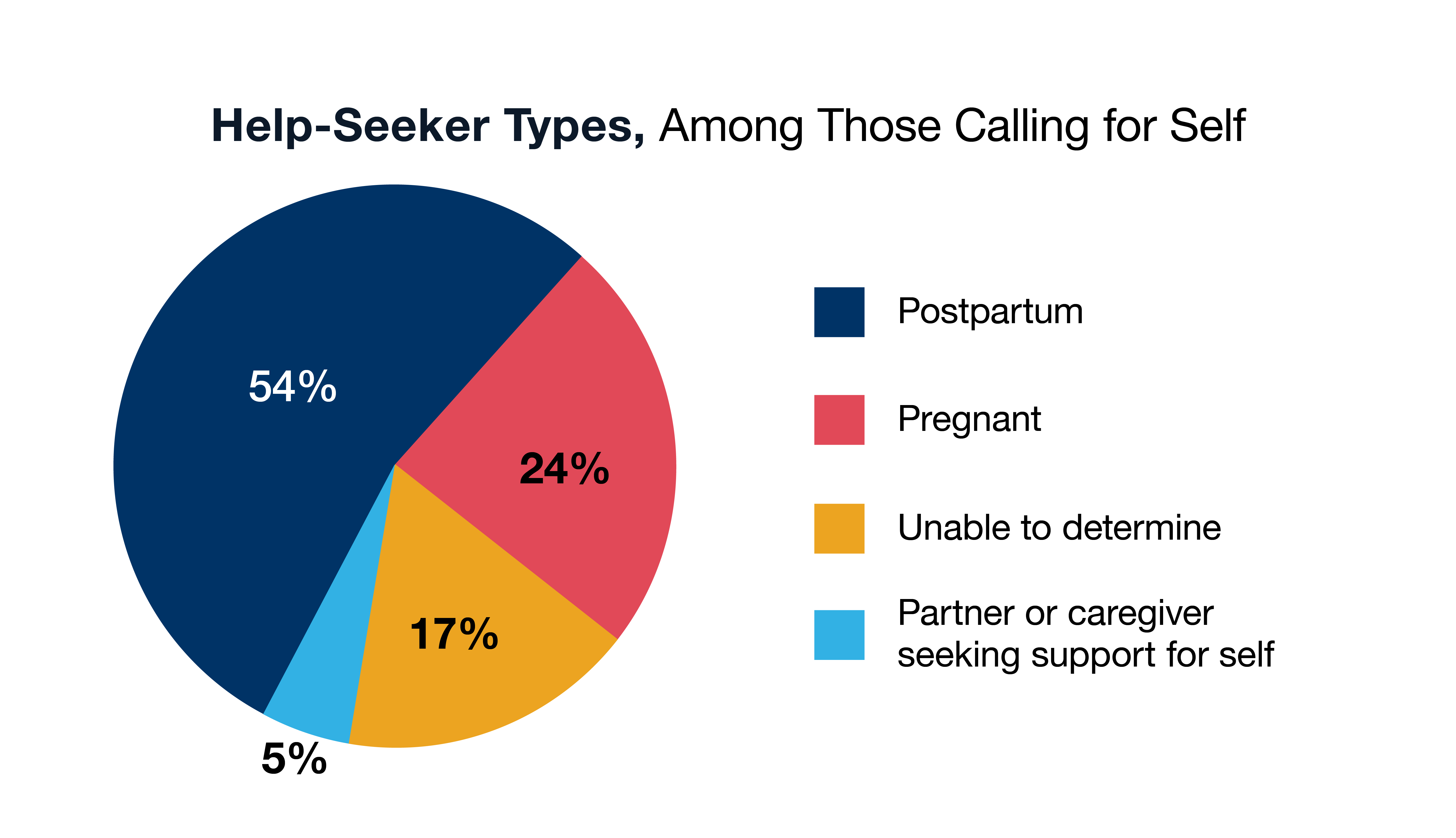
Were the people who contacted the Hotline pregnant or in the postpartum period?
Among the people who said they were calling for themselves, more are reaching out in the postpartum period, vs. those who are pregnant (54% vs. 24%).1
- 1
Pregnant and Postpartum status is a subcategory of Calling for self. Pregnant and Postpartum status is reported when a person says in a conversation that they are pregnant or postpartum.
Why did people contact the Hotline?
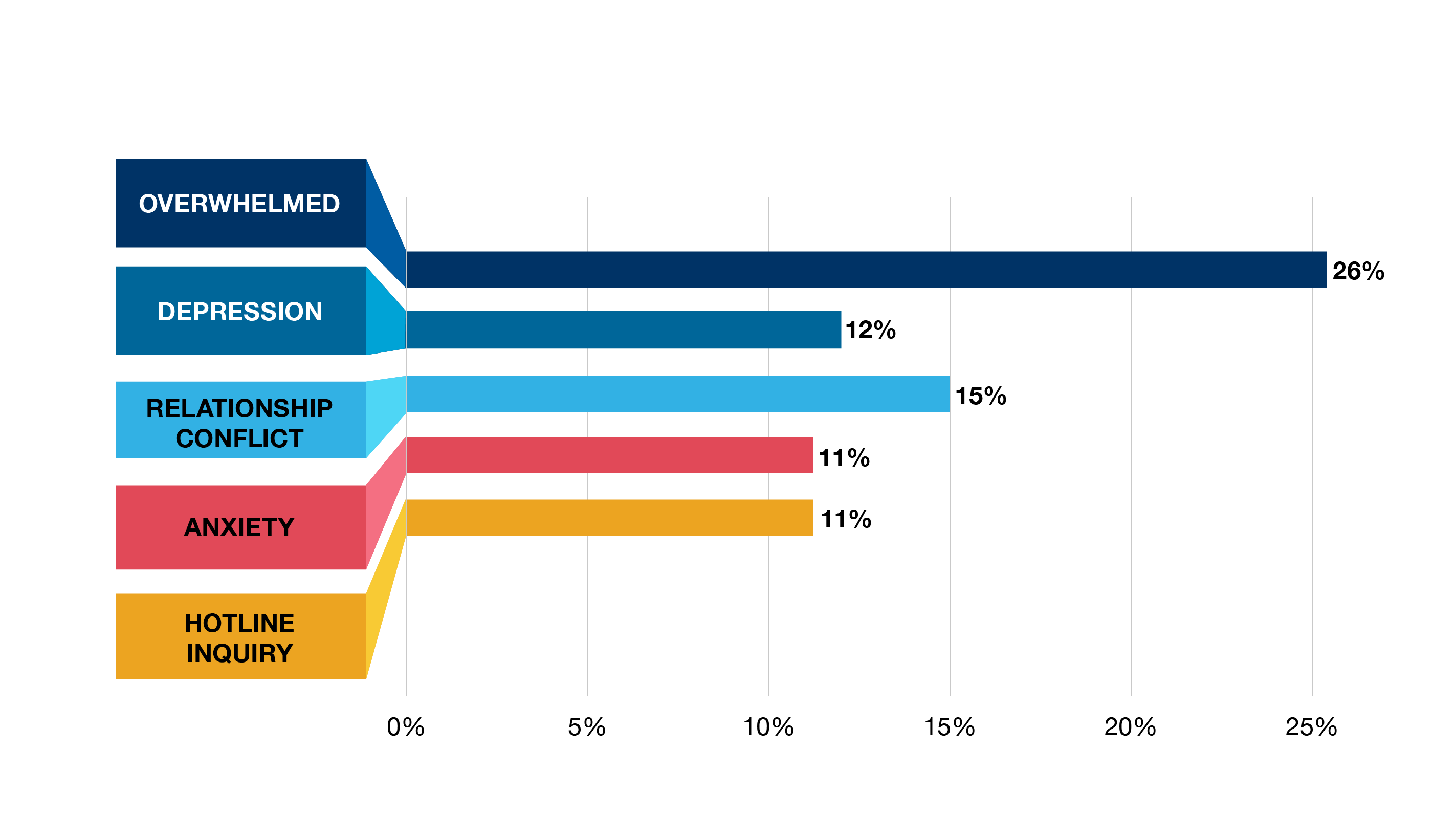
People may call the hotline for more than one reason. The top five reasons people contact the hotline are: feeling overwhelmed, depression, anxiety, relationship conflict, and pregnancy. Because some people called for more than one reason, these percentages add up to more than 100.
-
-
A help-seeker states they are overwhelmed. This most commonly means they are overcome with emotion/response/stimuli because of an amount of something (relationship, life, work, stress, childcare, parental demands, etc.) that is just too much to handle.
A help-seeker directly mentions feelings of depression, or the counselor recognizes signs/symptoms of depression.
A help-seeker directly mentions feelings of anxiety, or the counselor recognizes signs/symptoms of anxiety.
A help-seeker is experiencing relationship conflict that directly impacts their coping, ability to perform activities of daily living, parenting functions, and can include safety concerns, as well as intimate partner violence. Note, warm-line transfers may be made, as appropriate, to the National Domestic Violence Hotline.
A help-seeker contacts the hotline with questions regarding the Hotline, the support provided, its counselors, or with inquiries related to marketing/promotional materials.
The hotline helps. Here's how:
-
-
-

-
I honestly feel like I have a glimmer of hope again. I really needed this! This is something that I've been pushing aside for years, and it's finally coming to the top. Thank you so much, thank you for giving me a light at the end of the tunnel. I'm so hopeful and I feel like a weight has been lifted.
-
-
It doesn't feel like people care a lot of times... I've been feeling very unimportant and misunderstood, thank you for understanding and making me feel seen.
-
-
-
The hotline satisfied all of my needs, way beyond my expectations. The counselor was caring, empathetic, knowledgeable, patient, and incredibly helpful. She provided several helpful resources to contact. She gave me renewed hope for my daughter to recover from her postpartum depression. Thank you!
Note: The Hotline is confidential, the quotes above are from people who have agreed to share their experiences more broadly.
Date Last Reviewed: